Our group hosts research talks and discussions, bringing together visiting speakers and colleagues from the machine learning unit. Past talks and available materials are listed below.
In this talk, we explore how the structure of a game can be exploited to design efficient algorithms for computing and learning equilibria. The talk is organized into two parts.
The first part gives an overview of two approaches to finding approximate equilibria in two-player zero-sum games. We begin with an optimization-based method that exploits structural properties of the duality gap to obtain convergence guarantees. We then introduce Almost Greedy Fictitious Play, a variant of the classical Fictitious Play dynamics that achieves an instance-dependent O(1/T) convergence rate in the duality gap, matching the rate of continuous-time variants. A common algorithmic ingredient connects these approaches: an efficient one-dimensional optimization procedure for selecting step sizes.
The second and main part focuses on anonymous games, in which each player’s payoff depends on their own action and the aggregate behavior of the other players. Computing Nash equilibria in these games is PPAD-hard in general, motivating the search for tractable subclasses. In this direction, we initiate the study of anonymous games with linear utilities, focusing on the case of two actions. We develop a novel combinatorial characterization of equilibrium solutions that reduces the search to polynomially many candidate strategy configurations, yielding the first polynomial-time algorithm for computing exact Nash equilibria in this class. We also establish a connection to nonconvex–nonconcave min–max optimization and illustrate why stationarity alone is insufficient to recover an equilibrium. Finally, we use the structural insights to design sequential best-response dynamics with guarantees for reaching approximate equilibria.
This talk is based on joint works with Michail Fasoulakis, Evangelos Markakis, Ioannis Panageas, Giorgos Roussakis, and Jingming Yan.
Speaker bio
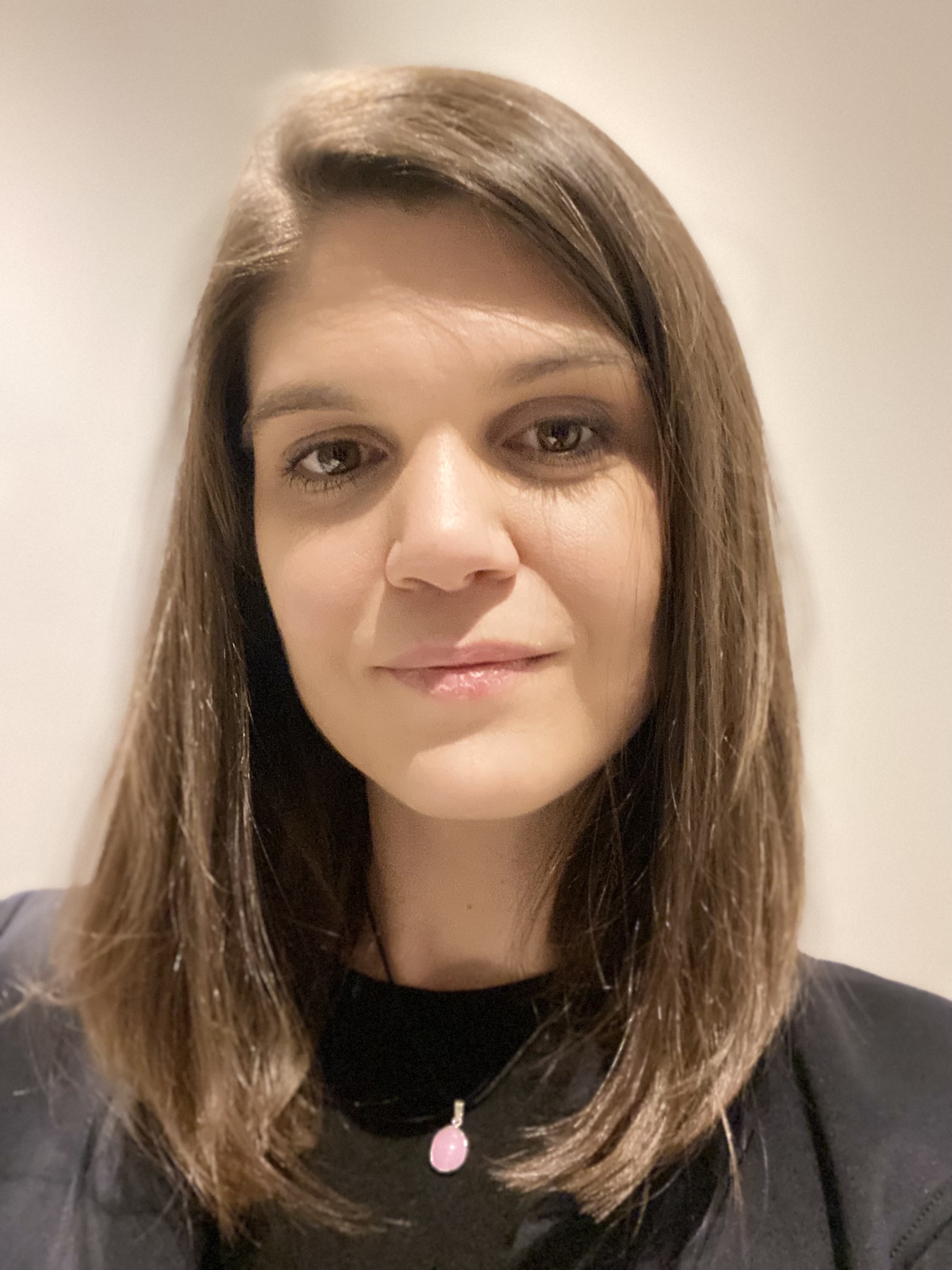
Christodoulos Santorinaios is a PhD candidate at the Athens University of Economics and Business, advised by Evangelos Markakis and supported by an Archimedes AI PhD fellowship, with research interests in algorithmic game theory, optimization, and learning in games.
· 15:00 (Vienna time)
Seminar Room FB 02 10 (2nd floor), Erzherzog-Johann-Platz 1, TU Wien
Abstract
Deep learning continues to achieve impressive breakthroughs across disciplines but relies on increasingly large neural network models that are trained on massive data sets. Their development inflicts costs that are only affordable by a few labs and prevent global participation in the creation of related technologies. But does it really have to be like this?
We will identify some of the major challenges of deep learning at small scales and present solution strategies pertaining to learning dynamics, the design of sparse training algorithms and problem specific neural network design. Looking forward, we will discuss how multi-agent network designs could potentially overcome fundamental trade-offs between model specialization and trainability.
Speaker bio
Rebekka Burkholz leads the Relational Machine Learning Group at CISPA Helmholtz Center for Information Security, where she is a faculty member. Her research investigates the foundations of deep learning and develops efficient, robust algorithms, drawing on complex network science and applications in biomedicine.
We explore the intersection of generative AI and reinforcement learning, demonstrating some ways generative models can be leveraged in RL. I also introduce some forms of self-supervised reinforcement learning algorithms that can be used to learn behavioral foundation models using the successor measure. Through a self-supervised pre-training phase, we can zero-shot extract a policy for any downstream task. We then show that many self-supervised RL methods can be unified through the successor measure, providing insights on future research directions.
Speaker bio
Amy Zhang is an Assistant Professor at UT Austin in the Chandra Family Department of Electrical and Computer Engineering. Her work focuses on improving generalization in reinforcement learning through bridging theory and practice in learning and utilizing structure in real-world problems. Previously, she was a Research Scientist at Meta AI FAIR and a postdoctoral fellow at University of California, Berkeley. She obtained her PhD from McGill University and the Mila Institute, and previously earned an M.Eng. in EECS and dual B.Sci. degrees in Mathematics and EECS from MIT.
Diffusion models are usually presented as tools for learning complex data distributions. In this talk, I will discuss a complementary view: before learning the full distribution, diffusion models first learn where the data lives. In continuous spaces, this means recovering the geometry of the data manifold before accurately modeling the density on it. In discrete spaces, such as language, it means learning validity or support structure before learning fine-grained frequencies. This perspective helps explain why diffusion models can generate realistic and novel samples even when their learned scores are still coarse. The talk will introduce the main intuition behind this “geometry-before-density” principle, explain how it appears in both continuous and discrete diffusion models, and discuss its implications for generalization, memorization, and the design of more robust generative algorithms.
Speaker bio
Ya-Ping Hsieh received his PhD from EPFL and was a postdoctoral researcher at ETH Zurich. He is currently an Assistant Research Fellow at the Institute of Statistical Science, Academia Sinica. His research focuses on the mathematical and algorithmic foundations of AI, with particular emphasis on AI for Science, optimization, and game theory.
Alberto Maria Metelli
Politecnico di Milano
Learning with Diverse Human Feedback
· 11:00 (Vienna time)
Seminar Room FB 02 10 (2nd floor), Erzherzog-Johann-Platz 1, TU Wien
Abstract
Reinforcement learning is built around the idea of a reward function that defines the task to be solved. However, designing an effective reward function is often challenging and requires substantial expert knowledge. In many cases, humans are better suited to provide indirect feedback on an agent’s behavior rather than assigning explicit numerical rewards. Such feedback may take the form of preferences, corrections, or demonstrations. In this talk, we present core ideas for unifying diverse forms of human feedback through rationality models of behavior. Particular attention is devoted to preference-based feedback, for which we discuss several modeling approaches, the corresponding learning problems, and algorithms for addressing them.
Speaker bio
Alberto Maria Metelli is an Assistant Professor of Information Processing Systems with the Dipartimento di Elettronica, Informazione e Bioingegneria (DEIB) in the Artificial Intelligence and Robotics Laboratory (AIRLab) at Politecnico di Milano. He obtained his Ph.D. in Information Technology (cum Laude) in March 2021, awarded the "Premio NeoDottori di Ricerca Marco Cadoli 2021" as the best Italian Ph.D. thesis in AI. He is co-founder of ML Cube S.r.l., an innovative start-up for machine learning lifecycle management. He won the FIS Starting Grant in 2025, a prestigious Italian award for fundamental research. His research revolves around reinforcement learning. He is a member of the ELLIS Society and co-author of over 50 papers in top venues (JMLR, MLJ, ICML, NeurIPS, AAAI).
The lecture explores optimization algorithms through the lens of dynamical systems, highlighting how classical gradient methods, momentum schemes, and accelerated algorithms can be understood as discrete-time approximations of continuous dynamics. Starting from gradient descent and Nesterov acceleration, I will discuss how geometric and spectral viewpoints explain convergence rates, acceleration, and the role of conditioning in large-scale optimization. The lecture will then connect optimization theory to current questions in deep learning, including the edge-of-stability phenomenon and the implicit regularization effects of training dynamics. I will also discuss recent directions in structure-aware learning, with an emphasis on sparse and low-rank training methods for transformer models. Overall, the lecture shows how a dynamical systems perspective sheds light on classical optimization results while also informing the design of algorithms for modern deep learning problems.
Speaker bio
Michael Muehlebach studied mechanical engineering at ETH Zurich and specialized in robotics, systems, and control during his Master's degree. He received the B.Sc. and the M.Sc. in 2010 and 2013, respectively, before joining the Institute for Dynamic Systems and Control for his Ph.D. He graduated under the supervision of Prof. R. D'Andrea in 2018 and joined the group of Prof. Michael I. Jordan at the University of California, Berkeley as a postdoctoral researcher. In 2021 he started as an independent group leader at the Max Planck Institute for Intelligent Systems in Tuebingen, where he leads the group "learning and dynamical systems".
He is interested in a variety of subjects, including machine learning, dynamical systems, and optimization. During his Ph.D. he developed approximations to the constrained linear quadratic regulator problem, a central problem in control theory, and applied these to model predictive control. He also designed control and estimation algorithms for balancing robots and flying machines. His more recent work straddles the boundary between machine learning and optimization, and includes the analysis of momentum-based and constrained optimization algorithms from a dynamical systems point of view.
He received the Outstanding D-MAVT Bachelor Award for his Bachelor's degree and the Willi-Studer prize for the best Master's degree. His Ph.D. thesis was awarded with the ETH Medal and the HILTI prize for innovative research. He was also awarded a Branco Weiss Fellowship, Emmy Noether Fellowship, and an Amazon research grant, which fund his research group. He is also a member of the editorial board of Foundations and Trends in Machine Learning.
Blind denoising diffusion models and the blessings of dimensionality
· 14:00–15:00 (Vienna time)
Seminar Room FB 02 10 (2nd floor), Erzherzog-Johann-Platz 1, TU Wien
Abstract
We analyze, theoretically and empirically, the performance of generative diffusion models based on blind denoisers, in which the denoiser is not given the noise amplitude in either the training or sampling processes. Assuming that the data distribution has low intrinsic dimensionality, we prove that blind denoising diffusion models (BDDMs), despite not having access to the noise amplitude, automatically track a particular implicit noise schedule along the reverse process. Our analysis shows that BDDMs can accurately sample from the data distribution in polynomially many steps as a function of the intrinsic dimension. Empirical results corroborate these mathematical findings on both synthetic and image data, demonstrating that the noise variance is accurately estimated from the noisy image. Remarkably, we observe that schedule-free BDDMs produce samples of higher quality compared to their non-blind counterparts. We provide evidence that this performance gain arises because BDDMs correct the mismatch between the true residual noise (of the image) and the noise assumed by the schedule used in non-blind diffusion models. This is joint work with Zahra Kadkhodaie, Sinho Chewi, and Eero Simoncelli.
Speaker bio
Aram-Alexandre Pooladian is a Foundations of Data Science Postdoctoral Associate at Yale University. He completed his PhD at the Center for Data Science at New York University under the supervision of Jonathan Niles-Weed. Prior to his PhD, he completed his undergraduate and master's degree in applied mathematics at McGill University, where he worked with Adam Oberman and Tim Hoheisel.